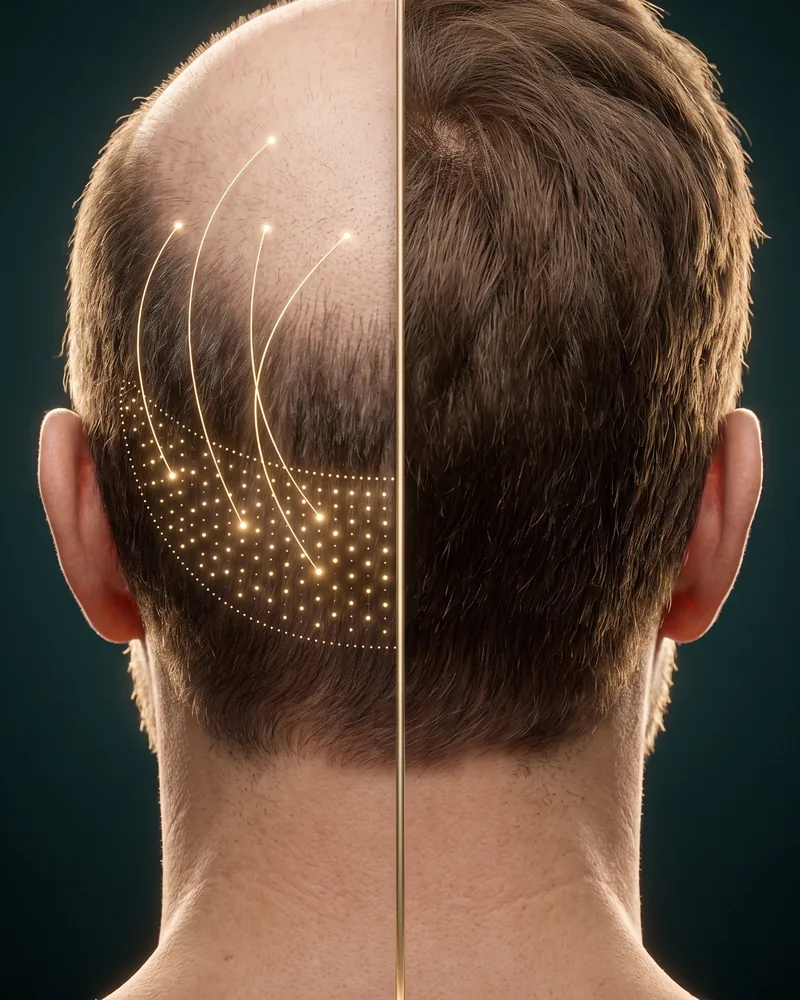
DHT (dihydrotestosterone) is the hormone behind pattern hair loss: your body converts testosterone into DHT, and in genetically sensitive follicles, DHT shrinks them until they quit. “Blocking” it is how nearly every hair-loss treatment works. The differences are how hard, with what evidence, and at what cost. Here is the honest map.
The enzyme 5-alpha-reductase converts a small share of your testosterone into DHT. In follicles that carry genetic sensitivity, the pattern you inherited, DHT binds to androgen receptors and shortens the growth cycle, round after round. Hairs grow back thinner, shorter, lighter: miniaturization. Eventually the follicle produces nothing visible at all.
Two facts follow from this mechanism, and they frame every treatment decision:
| Option | What it does | Evidence | Consider |
|---|---|---|---|
| Finasteride (Rx) | Inhibits 5-alpha-reductase systemically | Strongest: FDA-approved for male pattern loss | Prescription only; potential sexual side effects to discuss with a doctor |
| Saw palmetto | Botanical shown to reduce the conversion of testosterone to DHT | Moderate: smaller studies, milder effect | Gentler profile; common in supplements incl. Nutrafol® |
| Pumpkin seed oil | Botanical with 5AR-inhibiting activity | One notable RCT (2014), modest gains | Food-grade safety |
| Green tea (EGCG), zinc, rosemary | Lab-level 5AR inhibition or scalp effects | Weak-to-early human evidence | Fine as diet; not a plan by themselves |
The pattern to notice: as side-effect risk drops, so does potency. There is no free lunch. There are trade-offs you choose knowingly.
Nutrafol® is the supplement we partner with at the clinic, and the reason is exactly this hierarchy: it packages the botanical route, including saw palmetto, into a 100% drug-free daily formulation, shown in clinical studies to improve hair growth, that targets multiple root causes of thinning: stress, hormones (including reducing the conversion of testosterone to DHT), nutrition and more.*
Who it makes sense for: early thinning, maintenance around a transplant, and patients who cannot or prefer not to take prescription finasteride. Who it does not: bald zones waiting for a miracle. We put it inside a plan, here is how it fits our transplant protocol, not on a shelf as a lone hope. For the full honest review, read Does Nutrafol Actually Work?
*These statements have not been evaluated by the Food and Drug Administration. This product is not intended to diagnose, treat, cure, or prevent any disease. We are an official Nutrafol® partner and may be compensated for purchases.
No food blocks DHT like medicine does. But diets rich in pumpkin seeds, green tea, tomatoes (lycopene), zinc sources (oysters, lentils) and omega-3s support the environment your follicles live in. Think of food as the soil, supplements as fertilizer, and clinical treatment as the actual gardening.
If your temples or crown have been smooth for years, the follicles there are gone, and every month of “trying supplements first” on a bald zone is a month lost. The working answer for those areas is moving DHT-resistant follicles from your donor zone into place: FUE transplantation. Blockers then defend everything around the new hair. That is the complete strategy.
Prescription finasteride carries documented potential side effects, including sexual ones. A real conversation to have with a doctor, not a blog. Botanical routes are gentler; Nutrafol® is 100% drug-free and shown in clinical studies to support hair growth.*
Hair moves in cycles: expect 3–6 months before honest change, whatever route you choose. Anything promising visible results in weeks is selling you something else.
Female pattern loss involves DHT too, but treatment differs. Finasteride is generally not used in women of childbearing age, which is why drug-free routes and treatments like PRP carry more of the load. See our female hair loss page.
No, and do not. Pattern loss is about follicle sensitivity to DHT, not high testosterone. Plenty of men with normal or low testosterone bald aggressively. The lever is the conversion enzyme and the follicle, not your hormones as a whole.
A free assessment shows how far your loss has progressed, which zones are savable, and which need more than a blocker. Thirty minutes, honest answers.
Schedule a CallAccessibility
Text size
Saved on this device only. If something here does not work for you, call 813-773-8013 or email info@hairtransplantdesign.com and we will fix it.